
Late updated: 18 Dec 2025 13:12
Written by: Amber Collins
Eco-Friendly Office Lighting Tips For Small UK Businesses: A Practical Guide
Reducing our environmental impact is a priority for businesses across the UK, and lighting is a significant part of this journey. Adopting eco-friendly office lighting can substantially decrease energy consumption and cut operational costs. For small UK businesses, implementing sustainable solutions isn't just an environmental imperative; it also makes financial sense.
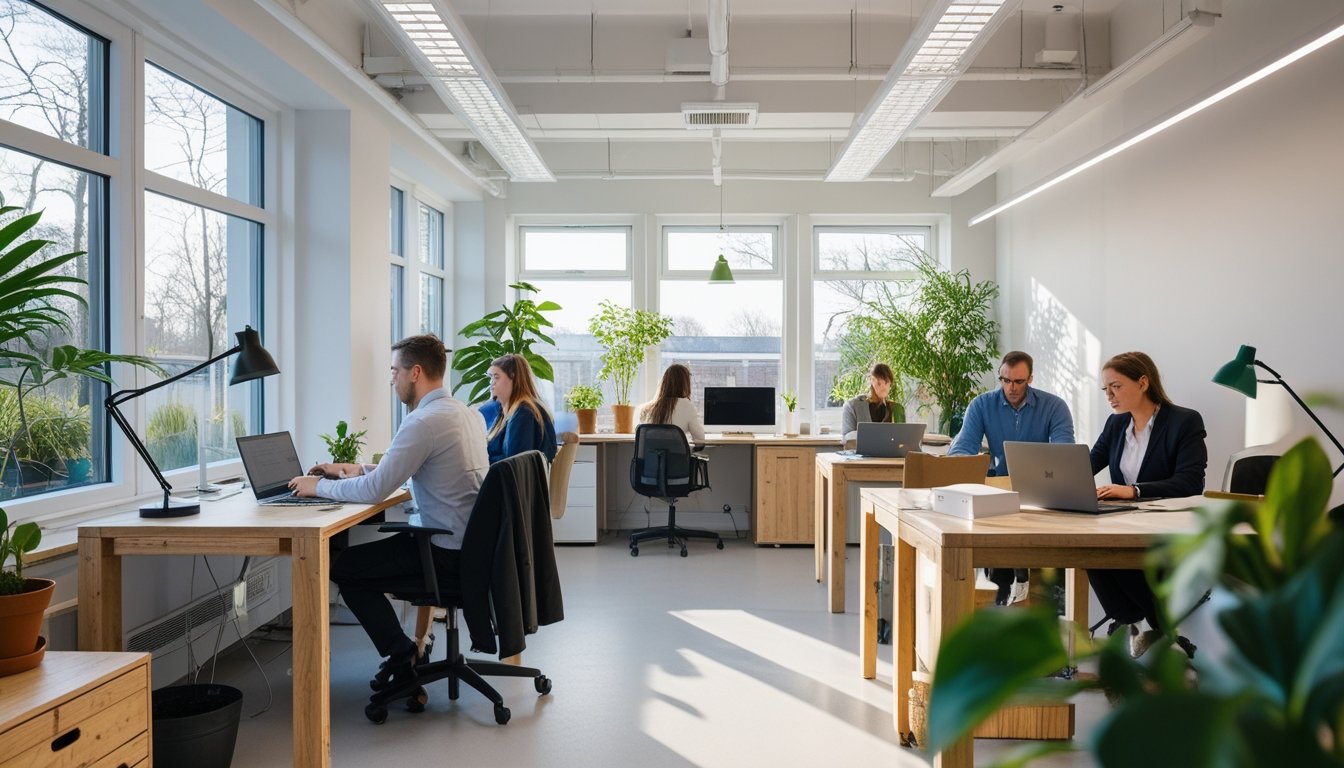
We understand the unique challenges faced by small businesses and how crucial it is to find practical, cost-effective solutions. With the right strategies, we can transform our workspaces into sustainable environments that benefit both the planet and our bottom line. Sustainable office lighting not only enhances energy efficiency but also improves employee well-being and productivity in the workplace.
Our exploration of eco-friendly office lighting will guide you through key principles, cutting-edge technologies, and practical strategies tailored for small UK businesses. Let’s illuminate our offices with solutions that align with our values and make a tangible difference.
Key Takeaways
- Eco-friendly lighting reduces energy consumption and costs.
- Sustainable lighting enhances employee well-being.
- Tailored solutions benefit UK small businesses.
Key Principles for Eco-Friendly Office Lighting in Small UK Businesses
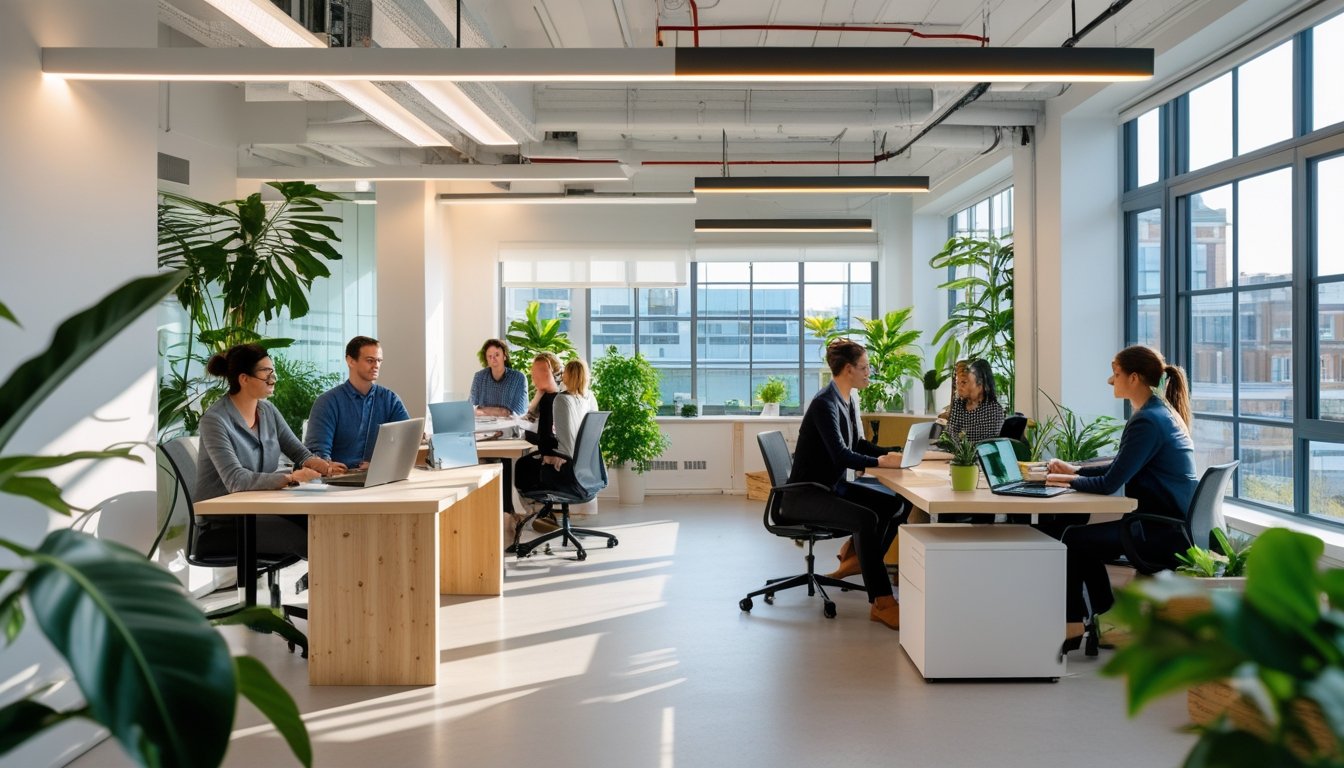
Implementing eco-friendly office lighting can significantly reduce energy consumption and lower carbon emissions in small UK businesses. To achieve sustainable lighting, we must focus on energy efficiency, optimal use of natural light, transitioning to LED, and minimising environmental impact.
Energy Efficiency and Reducing Energy Consumption
Energy efficiency is at the heart of eco-friendly office lighting. We should focus on installing lighting systems that consume less energy while maintaining or improving lighting quality. Using energy-efficient technologies such as motion sensors and timers can ensure lights are only used when needed, thus conserving energy. Smart lighting controls can be programmed to adjust brightness based on the time of day or occupancy, further cutting down unnecessary energy use. Exploring various technologies to ensure our lighting systems operate at their peak efficiency can lead to substantial energy savings.
Maximising Natural Light and Daylight Harvesting
Natural light is a free and abundant resource that we can maximise to reduce reliance on artificial lighting. Designing office spaces to make the most of daylight involves using large windows and open layouts. This not only aids in reducing energy consumption but also enhances employee well-being and productivity. Daylight harvesting is another strategy we can embrace, using sensors to adjust artificial lighting based on the amount of natural light entering the space. By integrating these systems, we can seamlessly blend natural and artificial lighting for sustainable office environments.
Transitioning from Incandescent and Fluorescent Bulbs to LED Lighting
LED lighting is a critical component of energy-efficient office lighting. Unlike incandescent and fluorescent bulbs, LEDs consume significantly less power and offer longer lifespans. Transitioning to LED lighting means we can achieve up to 80% energy savings compared to traditional lighting options. This not only lowers electricity bills but also reduces the frequency of bulb replacements, decreasing maintenance costs. As businesses shift towards sustainability, replacing older lighting technologies with LEDs is a straightforward yet impactful change we must consider.
Environmental Impact and Carbon Footprint Reduction
Our choice of office lighting plays a crucial role in reducing our carbon footprint. By opting for energy-efficient lighting solutions, we contribute to the reduction of greenhouse gas emissions linked to traditional energy use. Focusing on sustainable lighting practices enables us to fulfil corporate social responsibilities towards climate change and environmental preservation. Moreover, compliance with UK regulations and incentives can facilitate our journey towards an environmentally friendly office. As stewards of the planet, it is imperative that we make informed decisions about our lighting systems to lead by example and promote sustainability in business.
Strategies and Technologies for Sustainable Office Lighting
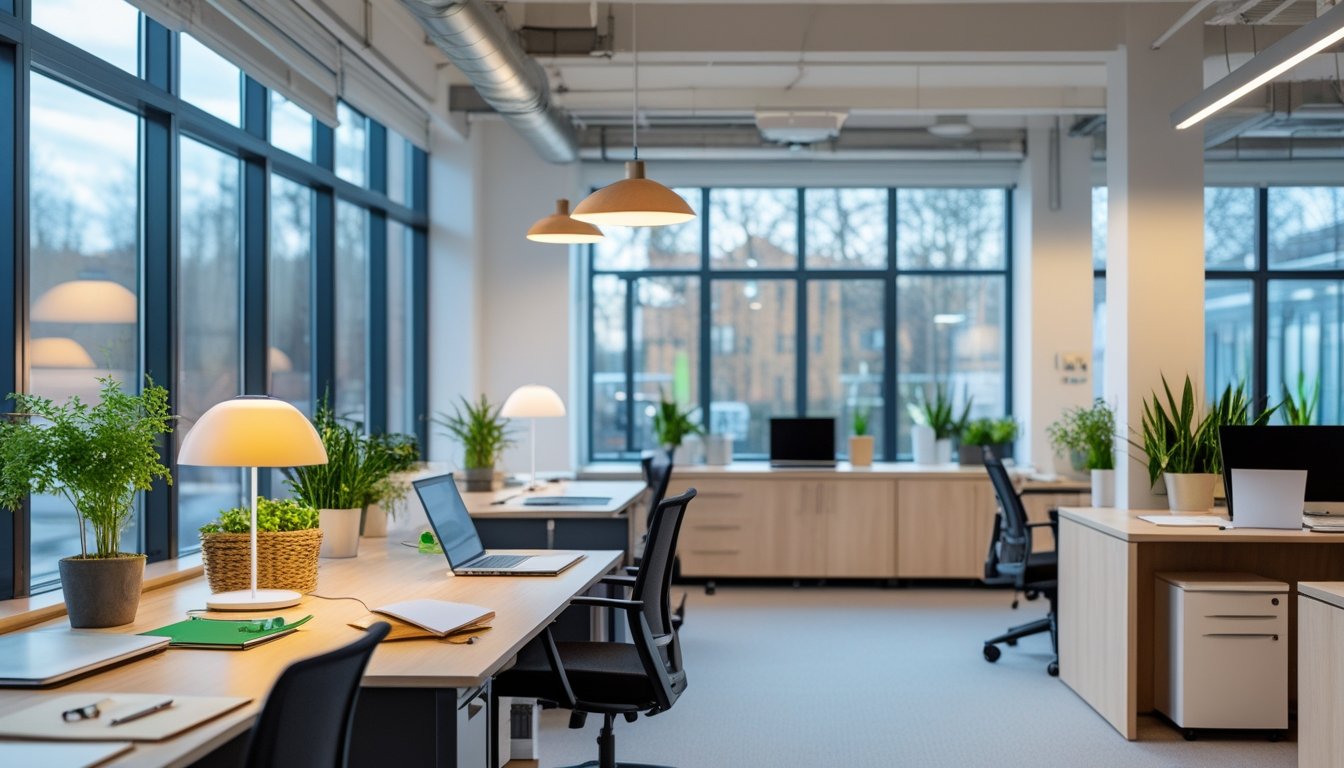
In the realm of sustainable office lighting, leveraging energy-efficient technologies and strategic designs can significantly reduce environmental impact and operational costs. By focusing on advanced lighting solutions and sustainable practices, small UK businesses can create an eco-friendly office environment.
Selecting Energy-Efficient LED Fixtures and Bulbs
LED office lighting stands as one of the most effective strategies for reducing energy consumption. These energy-efficient LEDs consume a fraction of the power used by traditional incandescent or fluorescent bulbs, translating to reduced utility bills and a smaller carbon footprint. When selecting LED products, it's important to consider factors such as lumens, colour temperature, and the Energy Star rating to ensure an optimal balance between brightness and efficiency. LED downlights and strips can provide versatile lighting solutions suitable for various office settings. Furthermore, opting for products with a longer lifespan ensures less frequent replacements, contributing to resource conservation and reducing waste.
Utilising Smart Controls: Motion Sensors, Daylight Sensors, and Energy Monitoring
Smart lighting systems offer a plethora of benefits by integrating features such as motion sensors, daylight sensors, and energy monitoring. Motion sensors ensure that lights are only used when areas are occupied, while daylight sensors adjust the artificial lighting based on natural light availability, enhancing energy savings. These smart controls reduce unnecessary energy consumption and contribute to creating an environmentally conscious workspace. Energy monitoring tools allow us to track usage patterns, identify inefficiencies, and optimise lighting schedules. Implementing these technologies not only conserves energy but also improves workplace efficiency and comfort.
Incorporating Tunable and Adjustable Lighting Systems
Tunable white lighting systems provide flexibility in adjusting the colour temperature to suit different tasks and moods. These adjustable lighting solutions are especially beneficial in office environments where visual comfort and focus are paramount. Tuning the light to mimic natural daylight at workstations can boost employee productivity and well-being. Adjustable lighting technologies permit fine-tuning of intensity and warmth, catering to individual preferences and specific activities. By adopting tunable lighting, offices can create a dynamic and adaptive illumination plan that enhances the overall workspace environment.
Promoting Recycling, Circular Economy, and Reducing Waste
Sustainable lighting solutions extend beyond selecting energy-efficient products; they also encompass end-of-life considerations. Encouraging recycling of lighting fixtures and bulbs is essential to reduce waste and support the circular economy. Many manufacturers offer take-back programmes or recycling services, ensuring that used components are repurposed or disposed of responsibly. Opting for durable equipment and practising routine maintenance can prolong the lifespan of lighting systems. By prioritising reduction and recycling, we can significantly minimise environmental impact and promote a more sustainable approach to office lighting.
Frequently Asked Questions

In this section, we address common queries related to implementing eco-friendly lighting in small UK businesses. Our focus is on practical solutions that reduce energy consumption and enhance sustainability without compromising the workspace environment.
How can small businesses effectively reduce their energy consumption with lighting choices?
We can reduce energy use by switching to LED lighting, which consumes substantially less power than traditional bulbs. Implementing smart lighting systems and timers can also optimise usage, turning off lights automatically when they're not needed.
What are the best LED lighting solutions for a small business aiming to be more sustainable?
LED lights are the top choice for businesses due to their longevity and efficiency. Look for LED products with high lumen outputs and low wattage. Brands offering energy-efficient models with excellent warranties are highly recommended for long-term savings.
Could you advise on the most cost-effective motion sensor lights suitable for small business premises?
Motion sensor lights are excellent for areas with variable occupancy such as restrooms and breakrooms. Brands known for reliability at a lower cost are ideal, focusing on those that offer easy installation and adjustable sensitivity settings.
What strategies can a small enterprise adopt to optimise natural light in their workspace?
Maximising natural light involves smart interior design choices. We should consider open floor plans and mirrors to reflect light. Installing large windows and using light-coloured paints can also enhance the natural brightness of an office space.
How does the installation of dimmer switches contribute to an eco-friendly office environment?
Dimmer switches provide flexibility by allowing us to adjust lighting levels throughout the day. This adaptability can lead to reduced energy use, particularly during daylight hours when less artificial lighting is required.
What are the available government incentives for small UK businesses upgrading to energy-efficient lighting?
In the UK, various incentives are available to encourage small businesses to upgrade. Programmes like the Enhanced Capital Allowance (ECA) and the Carbon Trust's Green Business Fund offer support, helping us offset the initial costs of implementing energy-efficient solutions.