
Late updated: 17 Dec 2025 10:12
Written by: Amber Collins
Green Business Energy Strategies for Cost Savings: A Practical Guide
In today's dynamic business environment, companies face the pressing need to adopt sustainable practices, particularly in energy management. Green business energy strategies not only promote environmental responsibility but also offer significant cost savings. By focusing on energy efficiency, businesses can transform their operations, leading to reduced utility expenses and improved bottom lines. This shift is essential for staying competitive and appealing to increasingly eco-conscious consumers.
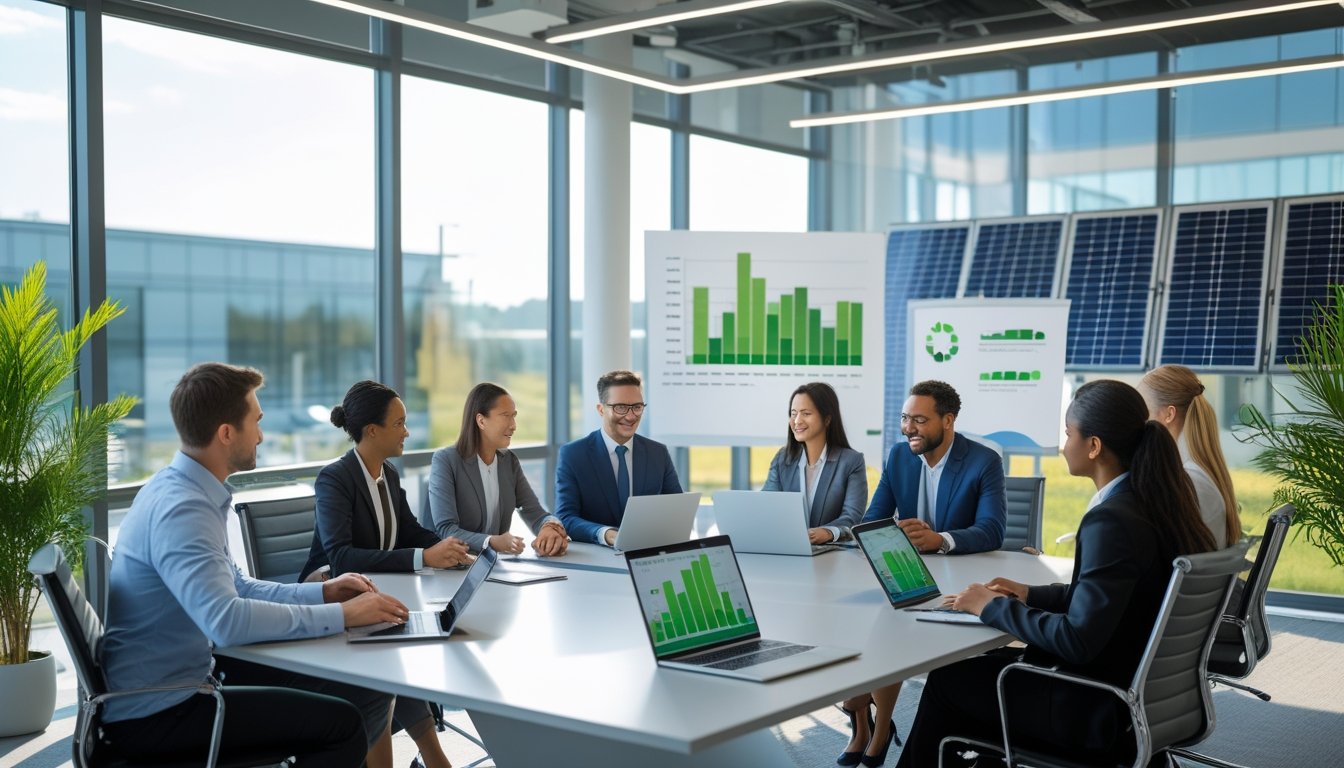
As we explore these strategies, it's crucial to consider the practical steps businesses can take to make meaningful changes. Investing in energy-efficient equipment, improving insulation, and optimising operational behaviours are just a few ways to achieve substantial savings. Renewable energy sources also play a vital role in enhancing sustainability while providing long-term cost effectiveness.
Our exploration of these green strategies will provide valuable insights into creating a more sustainable business model. We aim to highlight how businesses, regardless of size, can effectively reduce energy consumption and cut costs through both advanced technological solutions and simple behavioural adjustments.
Key Takeaways
- Implement green strategies for cost savings.
- Utilise energy-efficient technology and practices.
- Combine technology with behavioural changes.
Core Strategies for Green Business Energy Cost Savings

Adopting green energy strategies can significantly reduce business energy costs while improving energy efficiency. By implementing smart practices and using advanced technologies, companies can achieve substantial energy savings and enhance their sustainability profile.
Conducting Energy Audits to Identify Savings Opportunities
An energy audit is a vital first step in understanding a business's energy usage. Conducted by professional energy consultants, these audits help pinpoint where and how energy is being consumed and identify inefficiencies. Among the key areas assessed are HVAC systems, lighting, and building envelope.
We can measure and monitor energy consumption during the audit to uncover patterns in energy use. Analysing utility bills can reveal spikes and trends that may indicate inefficiency or waste. The findings can lead to targeted actions to reduce energy costs, improve energy performance, and make informed decisions on technical improvements or behavioural changes to enhance energy management.
Optimising Heating, Cooling, and Ventilation Systems
Heating, Cooling, and Ventilation (HVAC) systems are often among the largest energy consumers in commercial buildings. Energy-efficient equipment and the use of smart thermostats can help us maintain comfortable conditions while saving energy. For instance, programmable thermostats can automatically adjust temperatures based on occupancy patterns, ensuring optimsed use without compromising comfort.
Regular maintenance checks on HVAC components, including cleaning or replacing filters and sealing ductwork, can prevent energy leaks. Engaging in proactive energy management tactics ensures that systems operate efficiently and last longer, saving significantly on energy bills and reducing the carbon footprint of our business operations.
Upgrading Lighting for Efficiency and Savings
Transitioning to energy-efficient lighting presents an immediate avenue for cost reduction. LED lighting and CFLs (Compact Fluorescent Lamps) provide efficient alternatives to traditional bulbs, consuming less energy and offering longer lifespan. Additionally, implementing smart lighting controls, such as motion sensors and occupancy sensors, can further optimise energy use by ensuring lights are off when not needed.
Maximising the use of natural light also contributes to energy savings. Simple solutions like skylights or strategically placed windows not only reduce dependency on artificial lighting but also enhance the workspace environment. Efficient lighting layouts, along with modernised control systems, can significantly cut energy consumption, contributing to lower energy costs.
Reducing Energy Consumption Through Building Envelope Improvements
Enhancing the building envelope is a critical strategy for improving energy efficiency. Effective building insulation and air sealing reduce unwanted heat transfer and prevent energy leaks, maintaining stable indoor climates with less reliance on heating and cooling. Solutions like adding weather stripping, caulking gaps, or upgrading windows can substantially reduce energy costs.
An energy consultant can assess our building's current insulation and recommend cost-effective improvements. By optimising the building envelope, businesses can experience significant energy savings and create a more sustainable operation. Focusing on these enhancements can lead to immediate and long-term benefits in energy performance and cost reductions.
Advanced and Behavioural Approaches for Sustainable Business

To progress towards sustainability, businesses must blend advanced technology with strategic employee engagement. By incorporating renewable energy sources, encouraging staff to participate in energy-saving practices, and leveraging financial incentives, companies can substantially reduce their carbon footprint while enhancing profitability.
Integrating Renewable and Green Energy Solutions
Renewable energy solutions such as solar panels and wind turbines are pivotal in reducing greenhouse gas emissions and achieving sustainability targets. By investing in green energy infrastructure, businesses can lower dependency on traditional energy sources and save on long-term costs. We have seen organisations achieve significant savings by implementing energy-efficient building systems and utilising smart grid technologies. These adaptations enhance energy conservation efforts, allowing businesses to operate more sustainably while maintaining economic viability. Renewable energy sources not only cut down on emissions but also provide a reliable energy supply that is less susceptible to market fluctuations, thus offering greater predictability for budgeting.
Employee Engagement and Energy-Saving Initiatives
Employee engagement is vital in fostering a culture of sustainability within a business. We must empower our workforce with energy-saving tips and encourage active participation in energy conservation efforts. Simple initiatives, such as turning off unused lights, optimising computer usage, and encouraging the use of stairs for shorter trips, collectively make a substantial difference. By integrating these energy-saving initiatives into daily operations, organisations can significantly reduce their carbon footprint. Moreover, regular training sessions and workshops can further reinforce the importance of sustainability. A workplace that champions green habits not only benefits from reduced operational costs but also experiences improved employee morale and a greater sense of communal purpose.
Taking Advantage of Incentives, Financing, and Demand Response Programmes
Leveraging incentives and financing options is a strategic move for businesses aiming to adopt clean energy practices. Various demand response programmes and resources like the Database of State Incentives for Renewables & Efficiency (DSIRE) provide valuable information on grants, loans, and tax credits available for sustainable business initiatives. Companies can significantly reduce their initial expenditure by navigating these financial aids effectively. Additionally, participating in demand response programmes allows businesses to adjust their energy usage during peak periods, leading to cost savings and further enhancing energy efficiency. Navigating these resources requires a keen understanding of the available options and the ability to strategically implement them for maximum benefit.
Frequently Asked Questions
Our focus is on helping businesses navigate cost-saving strategies through energy efficiency measures, renewable energy integration, and government incentives. We also explore the impact of energy audits and how small enterprises can manage energy use effectively.
What are the most effective energy efficiency measures for businesses looking to reduce energy costs?
Implementing energy-efficient equipment and upgrading to LED lighting are pivotal steps. Regular maintenance, such as cleaning or replacing air filters, and sealing air leaks, can greatly enhance energy efficiency. Using programmable thermostats allows businesses to manage energy use better, aligning with operational hours and reducing waste.
How can renewable energy sources be integrated into a business's existing energy strategy to cut expenses?
Businesses can explore options such as solar panels or wind turbines to generate renewable energy on-site. Another approach is to switch to green energy providers or participate in community solar programmes. These strategies not only reduce energy costs but also contribute to sustainability goals.
What government incentives are currently available to UK businesses investing in energy conservation?
The UK government offers several incentives, including the Enhanced Capital Allowance scheme, which allows businesses to claim tax relief on energy-efficient equipment. Additionally, grants and subsidies may be available for projects implementing sustainable technologies or improvements.
What role do energy audits play in identifying cost-saving opportunities within a company?
Conducting energy audits helps us pinpoint inefficiencies within our systems. By assessing energy consumption patterns, we can identify areas for improvement and implement targeted strategies that lower costs. Audits provide a comprehensive understanding of energy use, fostering informed decision-making.
How can small and medium-sized enterprises effectively manage energy consumption without significant investment?
Small businesses can start with simple practices, such as monitoring energy usage, switching off equipment when not in use, and shifting operation times to off-peak hours to capitalise on lower rates. Optimising space heating and cooling through manual adjustments rather than automated systems can also save costs without major investment.
What are the long-term financial benefits for businesses that implement sustainable energy practices?
Sustainable energy practices can lead to substantial cost savings over time. By reducing reliance on non-renewable energy sources and improving efficiency, businesses lower their operational costs and shield themselves from energy price volatility. Improvements in energy efficiency can also enhance a company’s reputation, potentially leading to increased revenue through customer loyalty.