
Late updated: 02 Dec 2025 12:12
Written by: Amber Collins
Innovative Ways To Boost UK Business Sustainability: Effective Strategies for Growth
In today's rapidly changing business landscape, the importance of sustainability has become a central focus for companies in the UK. With environmental regulations tightening and consumer demand for eco-friendly products increasing, UK businesses are actively seeking innovative ways to enhance their sustainability efforts. Leveraging technology and modern strategies to reduce emissions and optimise resources can provide a competitive edge while ensuring long-term viability.

As we delve into novel approaches, UK companies are adopting methods that integrate environmental goals with economic performance. Embracing smart resource management and using digital data analytics are just a few of the cutting-edge strategies making a significant impact. These advancements not only streamline operations but also transform sustainability from a mere obligation into a strategic advantage.
Exploring this theme, we find a vibrant landscape where businesses are transitioning from traditional practices to dynamic, sustainable models. This shift not only aligns with national net-zero goals but enhances brand reputation and fosters consumer trust. By committing to innovative sustainability practices, UK enterprises can pave the way for a resilient future while driving growth.
Key Takeaways
- Innovative strategies drive UK business sustainability.
- Cutting-edge tech helps achieve net-zero goals.
- Sustainability boosts competitiveness and growth.
Innovative Strategies to Enhance UK Business Sustainability
Our exploration of enhancing business sustainability in the UK centres on deploying innovative strategies that tackle environmental impacts while increasing operational efficiency. The focus is on adopting circular economy models, incorporating advanced technology to boost energy efficiency, leveraging renewable energy, and initiating waste reduction and recycling activities.
Embracing Circular Economy Models
Transitioning to a circular economy model can significantly enhance sustainability efforts within UK businesses. Instead of the traditional linear economy approach, which follows a ‘take-make-dispose’ model, circular practices aim to keep products and materials in use for as long as possible. By prioritising resource efficiency, businesses can reduce their carbon footprints and greenhouse gas emissions. Adoption of this model involves redesigning products for durability, repair, and recycling, which drives further sustainability. Companies can also innovate through product-as-a-service models, which emphasise leasing over owning, thus ensuring products remain functional longer and are fully recycled. Implementing circular economy principles not only enhances sustainability but also often leads to cost savings and new market opportunities.
Maximising Energy Efficiency Through Technology
Adopting technology to maximise energy efficiency is a critical strategy for UK businesses. Tools like smart meters and automation systems can significantly reduce energy consumption. Implementing energy-efficient lighting, such as LED solutions, can also drastically lower electricity usage and carbon emissions. Advanced data analytics enable companies to monitor and manage energy use more effectively, identifying areas of improvement. Such technologies allow businesses to optimise operations, reducing unnecessary energy waste and enhancing overall operational efficiency. By investing in these tech solutions, companies reduce their environmental impact and can often achieve cost efficiencies, reinforcing their commitment to sustainability.
Leveraging Renewable Energy Solutions
Utilising renewable energy sources is an effective way UK businesses can enhance their sustainability efforts. Incorporating solar panels and wind turbines into energy strategies drastically reduces reliance on fossil fuels, leading to a reduction in carbon emissions. This transition not only supports environmental goals but also shields businesses from the volatility of fossil fuel prices. Investing in renewable energy infrastructure can initially be costly, but the long-term savings and environmental benefits are significant. Many governments offer incentives for renewable implementations, further easing the transition. As pioneers in green energy adoption, businesses can enhance their brand reputation and customer trust, exhibiting leadership in sustainability.
Driving Waste Reduction and Recycling Initiatives
Fostering waste reduction and recycling initiatives is essential for sustainable business operations. By setting clear recycling targets and integrating robust waste management systems, companies can dramatically cut landfill contributions and resource wastage. Employee engagement programmes can be set up to encourage eco-friendly behaviours, ensuring everyone plays a part in driving sustainability. Moreover, implementing innovative recycling technologies can transform waste into resources, supporting the circular economy model. Companies can collaborate with supply chain partners to ensure sustainability practices are upheld throughout the production and distribution processes. These initiatives not only enhance environmental responsibility but can also provide significant cost savings and improve brand loyalty.
Cutting-Edge Approaches to Achieve Net-Zero and Environmental Stewardship
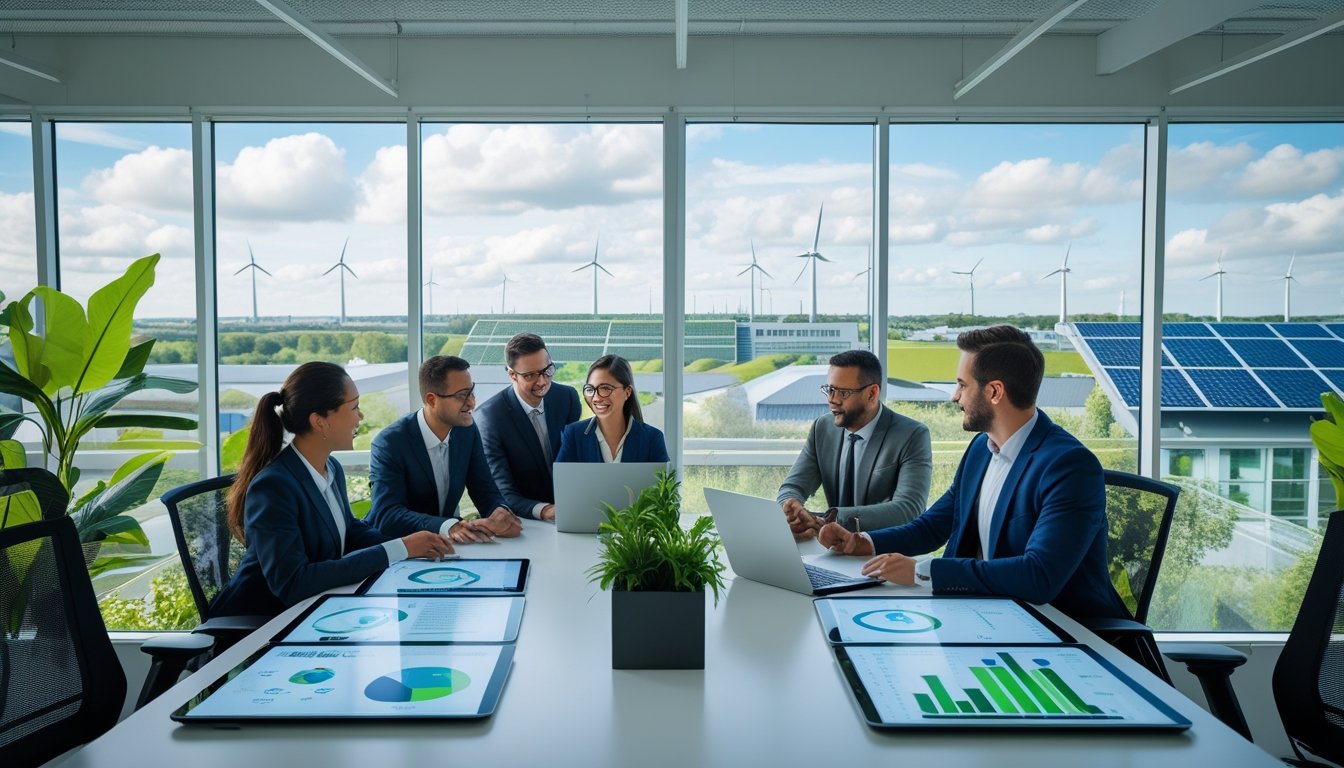
In the journey towards net-zero emissions and environmental stewardship, businesses must integrate innovative strategies to balance sustainability with economic growth. Carbon reduction initiatives, aligning with regulatory standards, adopting sustainable models, and advancing biodiversity are key elements of this transformation.
Implementing Carbon Reduction and Offsetting Measures
We must prioritise carbon reduction through both technological advancements and behavioural changes. Investing in carbon-neutral technologies, such as energy-efficient machinery and renewable energy sources, significantly lowers emissions. Businesses should engage in carbon offset projects, which compensate emissions by supporting projects like reforestation or renewable energy. These projects not only neutralise carbon footprints but also enhance brand reputation and social responsibility. It’s imperative to develop an integrated approach that combines direct reductions with offsets, ensuring a comprehensive and effective path to achieving carbon neutrality.
Aligning With UK Regulatory Standards and Environmental Goals
Aligning with UK regulatory standards and environmental goals is crucial. Regulations such as the UK's Climate Change Act provide a roadmap for businesses aiming for sustainability. Companies are encouraged to exceed these standards, reinforcing their commitment to environmental responsibility. By proactively participating in government-led sustainability initiatives, businesses can not only adhere to mandatory requirements but also influence policy developments. Participation in these regulatory dialogues allows us to better prepare for future changes, ensuring that our sustainability practices are not only compliant but also at the forefront of industry standards.
Embedding Sustainable Business Models and Investment
Sustainable business models are essential for long-term viability. Integrating sustainable investment practices allows companies to balance profit with environmental impact. This involves shifting to circular economies where resources are reused, refurbished, or recycled, minimising waste and maximising efficiency. Investments in sustainable transport solutions can also significantly reduce a company's carbon footprint. Encouragingly, investors are increasingly drawn to businesses committed to sustainability, recognising that these models often result in better long-term financial performance. The adoption of sustainable practices translates into genuine competitive advantage, enhancing economic resilience and consumer trust.
Advancing Biodiversity and Nature-Based Solutions
To enhance environmental stewardship, businesses must integrate biodiversity and nature-based solutions into their strategies. Creating and maintaining green spaces, such as urban gardens or dedicated conservation areas, can help mitigate urban temperature increases and improve air quality. Nature-based solutions support ecosystem services, which are vital for maintaining healthy environments. Companies that embed these strategies can contribute positively to local ecosystems and bolster environmental goals. Furthermore, engaging in biodiversity initiatives helps meet social responsibility targets, demonstrating a commitment to not just regulatory compliance but also to nurturing our planet for future generations.
Frequently Asked Questions

In our exploration of business sustainability, we address pivotal concerns such as reducing emissions, adopting a circular economy, and more. These questions are designed to provide clear insights into boosting sustainability practices among UK businesses.
What are the most effective methods for reducing carbon footprint in British businesses?
Reducing carbon footprints in businesses can be achieved through a variety of methods. Implementing energy-efficient practices, like upgrading to LED lighting and optimising HVAC systems, plays a significant role. Investing in energy-efficient machinery and engaging in carbon offset programmes are also proven strategies.
How can UK companies implement circular economy principles to enhance sustainability?
Adopting circular economy practices allows businesses to minimise waste and maximise resource efficiency. Companies can focus on designing products that are easier to recycle or refurbish. Additionally, forming partnerships with recycling firms and encouraging product take-back schemes can significantly contribute to a circular economy approach.
What are the key strategies for UK businesses to engage in corporate social responsibility effectively?
Effective corporate social responsibility (CSR) involves aligning business strategies with ethical practices and community engagement. Establishing clear CSR objectives, engaging with stakeholders, and integrating sustainability into company culture are crucial steps. Transparency in reporting and measurable targets help maintain accountability.
How can renewable energy be integrated into the operations of British enterprises?
Integrating renewable energy involves assessing energy needs and selecting appropriate solutions like solar, wind, or biomass. Many businesses opt for on-site renewable energy installations, while others purchase green energy from suppliers. Collaborative partnerships with energy providers often facilitate smoother transitions.
What incentives are available for UK businesses investing in sustainable practices?
The UK government offers various incentives for businesses adopting sustainable practices, such as grants, tax breaks, and subsidies. Programmes like the Green Business Fund provide financial and advisory support. Businesses may also benefit from enhanced capital allowances on energy-efficient equipment.
What are the best practices for waste management and reduction for businesses in the UK?
Effective waste management begins with conducting a thorough waste audit. Establishing recycling programmes and reducing single-use products are essential practices. Encouraging supplier take-back schemes and training employees on waste reduction can further enhance these efforts. Additionally, technology can aid in tracking and reducing waste generation.